
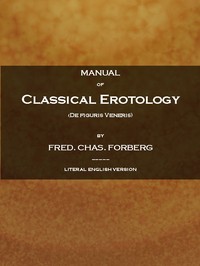
Manual of Classical Erotology (De figuris Veneris) by Friedrich Karl Forberg
Let's be clear from the start: this isn't a novel. There's no main character, and there's certainly no traditional plot. The Manual of Classical Erotology is exactly what its title suggests—a categorized collection. Think of it as an encyclopedia, but instead of entries on plants or planets, it's filled with passages from ancient Greek and Roman authors describing various acts and positions related to love and sex. The original text was in Latin, compiled in the 19th century by a German scholar named Friedrich Karl Forberg. He didn't write the content; he was more of a determined, slightly obsessed curator, gathering fragments from poets, playwrights, and philosophers that had been scattered for centuries.
The Story
There is no story in the usual sense. The 'plot' is the journey of the book itself. It opens with a scholarly preface (Forberg's part), and then dives right into the catalog. It's organized by type, pulling quotes from famous names like Ovid and less-famous ones, detailing everything with a dry, academic tone that somehow makes the content even more startling. It's a systematic attempt to document the uncensored private life of the classical world, all framed as a serious academic exercise. The tension comes from that clash: the very formal, old-fashioned language describing things that are anything but formal.
Why You Should Read It
You should read it to have your assumptions about the 'stuffy' ancient world completely overturned. We often see the past through a filter of marble statues and epic battles. This book removes that filter. It shows that people in togas were just as interested in the complexities and physicalities of love as we are. The frankness is jarring, but also weirdly humanizing. It's not a sexy book; it's a clinical one. That's what makes it fascinating. The value isn't in titillation, but in the sheer, audacious record-keeping. It proves that nothing under the sun is truly new.
Final Verdict
This is a niche book, but a memorable one. It's perfect for curious readers who love history but are tired of the same old kings-and-queens narrative. If you're fascinated by the everyday lives of people in the past, or if you enjoy primary sources that don't pull punches, you'll find this compelling. It's definitely not for everyone—its structure is dry and its content explicit. But if you approach it as a strange artifact, a piece of intellectual history that bridges the ancient and modern worlds in the most unexpected way, it's a truly unique and thought-provoking read.
This digital edition is based on a public domain text. Preserving history for future generations.
Ethan White
1 year agoAmazing book.
David King
1 year agoHonestly, it challenges the reader's perspective in an intellectual way. I learned so much from this.




Paul Taylor
9 months agoI started reading this with a critical mind, the breakdown of complex theories into digestible segments is masterfully done. If you want to master this topic, start right here.