
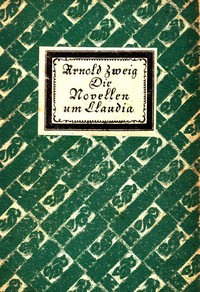
Die Novellen um Claudia by Arnold Zweig
Arnold Zweig's Die Novellen um Claudia is a collection of linked stories centered on its titular character. We follow Claudia through different stages of her life in Germany in the years leading up to and during the First World War. The narrative isn't a single, driving plot, but a series of intimate portraits. We see her in her youth, grappling with education and early romance, then as a young woman confronting the rigid expectations of family and society. The shadow of the war looms, affecting relationships, shifting social norms, and forcing personal choices that have profound weight.
The Story
The book is a mosaic of Claudia's experiences. It shows her trying to find intellectual and emotional space in a world that often wants to define her solely by her gender and class. We witness her relationships—with family, with potential partners, with friends—and how these connections are strained or transformed by the upheaval of the era. The war isn't just a backdrop; it reaches into the heart of her daily life, changing everything from career prospects to the very language people use to describe duty and sacrifice. The story's power comes from watching a perceptive individual make her way through a society that is, quite literally, coming apart at the seams.
Why You Should Read It
I picked this up expecting a period piece, but found a character who feels startlingly relatable. Zweig doesn't paint Claudia as a flawless heroine; she's complex, sometimes uncertain, and deeply real. Her struggle for self-determination against invisible social walls is a fight that hasn't really ended. Zweig's writing is clear and focused on psychological truth, which makes the historical setting feel immediate, not dusty. You get a sense of everyday life—the conversations, the anxieties, the small rebellions—that big history books often miss. It’s a quiet, thoughtful look at how a person preserves their inner self when the outside world is in chaos.
Final Verdict
This book is perfect for readers who love deep character studies and historical fiction that focuses on the human scale rather than battlefields. If you enjoyed the interiority of writers like Virginia Woolf or the social observation of Thomas Mann, but want something a bit more accessible, Zweig's Claudia is a fantastic companion. It's not a fast-paced adventure; it's a slow, rewarding walk in someone else's shoes during one of history's most pivotal times. A truly absorbing read for a quiet afternoon.
This digital edition is based on a public domain text. Distribute this work to help spread literacy.
William Jackson
1 year agoFive stars!



Paul Robinson
1 year agoFinally found time to read this!