
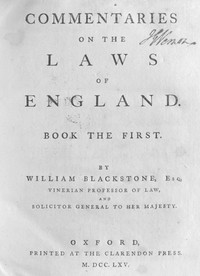
Commentaries on the Laws of England, Book the First by Sir William Blackstone
Okay, let's be clear: this is not a beach read. Commentaries on the Laws of England is a foundational text, the first major attempt to organize and explain English common law in a way that educated people outside the legal profession could understand. Published in the 1760s, it was a massive hit because it demystified the law.
The Story
There's no plot in the novel sense. Instead, Blackstone builds a system. Book the First, which this volume covers, focuses on the rights of persons. He starts with the big picture: the absolute rights of individuals, like personal security and liberty. Then, he works his way through the different categories of people in society according to the law of his time. He explains the rights and duties of the monarch, government officials, soldiers, husbands, wives, parents, children, and even corporations. He lays out how the church and state interact legally. It's a detailed, sometimes dry, but incredibly thorough map of who had what power and what protection under the law in 18th-century England.
Why You Should Read It
You read this to understand where our modern legal ideas came from. It's like meeting the grandparents of your country's laws. The experience is less about page-turning excitement and more about spotting familiar ideas in their original, often surprising, packaging. When Blackstone talks about 'the right to personal security,' you see the seed of modern human rights discourse. You also get an unfiltered look at the social assumptions of the era—some parts, like his views on the legal status of married women, will make you wince. That's the point. It shows us how far we've come and, sometimes, how certain legal structures have stubbornly persisted. Reading Blackstone makes you a more informed citizen. You start to see the historical roots in today's headlines and court decisions.
Final Verdict
This book is a specialized tool, but a powerful one. It's perfect for history buffs, law students, curious political science readers, or anyone fascinated by how societies are built. If you love deep dives into original sources and have the patience for 18th-century prose, the payoff is huge. You won't get drama, but you will get wisdom straight from the source. For a general reader, I'd recommend tackling it slowly, maybe a chapter at a time, and pairing it with a good modern history book for context. Think of it as the ultimate primary source for the legal world that shaped the English-speaking nations.
This book is widely considered to be in the public domain. You do not need permission to reproduce this work.





Karen Gonzalez
8 months agoI decided to give this a try based on a colleague's recommendation, the visual layout and supporting data make the reading experience very smooth. Well worth the time invested in reading it.