
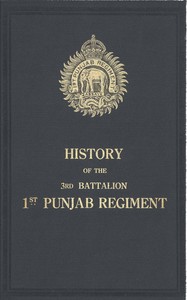
A brief history of the 3rd Battalion, 1st Punjab Regiment : formerly: 76th…
At first glance, this book is just military history: unit movements, commanding officers, parades in the sun. But for anyone who asks difficult questions, it becomes something irresistible inside. It feels like a locked cabinet opened for the first time in decades—mostly filled with orderly records, but with one vital drawer broken ajar, whispering secrets.
The Story
It begins with the battalion's origins: likely a British-officered ‘Indian’ unit carved from tradition and empire. But quickly the hook hits you — many significant engagements, including their overseas service in modern conflicts, are cloaked in phrases that do anything but inform. You'll start flipping pages looking for battles that never really materialize in the text, as if they've been filed away without courage.
That dry roll call of names, ranks, dates becomes a desperate map for someone—you—trying to reconstruct what battle felt like for those who lived and died there, without ever leaving your wondering chair. The big incident near the end leaks the most raw sadness: losses described with a detachment that feels almost medicinal, a terrible emptiness between incidents that should shoulder more weight.
And then there are blank spaces; captains and sergeants remembered but not; timelines that suddenly tumble strangely. There's confusion at reading the word ‘unspecified’ typed above action from an entire platoon moving into harm’s way, and some records that claim to piece together orders but seem to float in different versions among loose annexes.
Why You Should Read It
The more you read through the uniform entries, you realize: chaos leaves a ghost in rigid military language, and Anonymous (possible the whole regimental association maybe?) preserved those stiff shambles, which ends up beautiful but terrifying. It’s like someone else tried to compress trauma into a debrief and forgot to pause. Writing from civilian ‘histories’ avoids doubt; regimental histories, when candid, bruise you distinctively.
It asks cold questions that echo for all armies everywhere: why is silence so often next to machine fire? Whether orders come unremembered broken memories survive instead proper gloss the result is high dose of truth. This took persistent heart; someone did record that many, something clear.
Final Verdict
Who is this for? Military history enthusiasts avoiding airbrushed accounts. Anyone obsessed with long-ago campfire blab: a rich thicket you walk into wanting a battle route but fetch empty cartridge shells and hasty fixes only friends shake heads about sometimes. Also junior soldiers or NCOs writing unit histories who see ghosts in old orders have been here. Ghost-chasers love any document fighting consistent truth fight finish failing. I can't stress—you face truthful writerly riddles, very rare indeed these days in sanitised wars.
Poring over these pages made me imagine the one officer spending extra years collecting snippets, fighting personal mess decades later still to grip answers like sweat smooth slipped. You get access not to polished operation but heart-sigh real over absence lasting thousand kilometers. Brilliant improbable but brilliant.
Legal analysis indicates this work is in the public domain. You do not need permission to reproduce this work.
Margaret Davis
9 months agoI was particularly interested in the case studies mentioned here, the inclusion of diverse viewpoints strengthens the overall narrative. I'll be recommending this to my students and colleagues alike.
Paul Williams
1 year agoThe citations provided are a goldmine for further academic study.
Emily Williams
1 year agoAs a long-time follower of this subject matter, the concise summaries at the end of each section are a lifesaver. I’ll definitely be revisiting some of these chapters again soon.
George Garcia
6 months agoI particularly value the technical accuracy maintained throughout.



Thomas Miller
1 year agoAs a long-time follower of this subject matter, the critical analysis of current industry standards is very timely. I feel much more confident in my knowledge after finishing this.